
“Jon Cooper can’t adjust.… Up until this year, it was one of the most common refrains heard from commentators and Tampa Bay Lightning fans almost every postseason. The Lightning would look phenomenal during the regular season, but opposing coaches would figure out their system during a longer seven-game series and simply shut them down. Even in series that they won, oftentimes the display was far from convincing.
That’s until this year.
Obviously the end result in 2019-20 - being a Stanley Cup victory - suggests that a lot went right for the Lightning, but the *way* they got there leaves reasons for optimism moving forward. If we were content to put the heat on Cooper for past failures, we need to take a moment to give him immense credit for reversing fortune this year and showing that he can, indeed, make changes that benefit the on-ice product.
There was no better example of this during the team’s postseason run than the work done with the power play unit, especially as the Bolts moved into the Stanley Cup Final. What looked like a lethargic, comatose, predictable operation to start the playoffs turned into lethal unit that converted almost at will by the time Dallas was on the docket.
So, what changed? If my eye test is to be believed, the answer is simple: Movement. Once the Lightning started moving the puck, gaps in opposing coverage started to emerge. That allowed them to create opportunities for Brayden Point in the slot, or get Victor Hedman’s shot through from the blue line, or utilize Nikita Kucherov’s genius from the half wall. From my perspective, it wasn’t necessarily that the team was actively trying to get the puck on net more than they were before, but rather that their movement of the puck allowed for the creation of higher-quality, on-net chances. It ultimately paid off.
The numbers seem to support my what my eyes were telling me. As evidence, consider the following: The Lightning’s shot attempts per 60 minutes of five-on-four action during the Final was actually (slightly) lower than in the first three rounds:
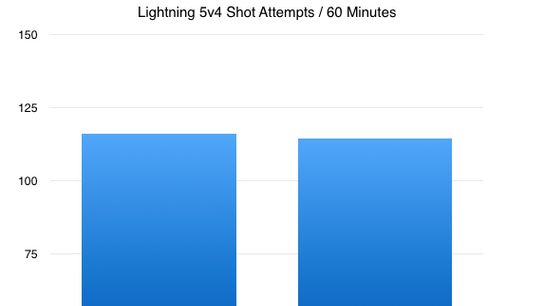
Again, it was never a case of the Lightning failing to attempt shots; it was simply a need to get the puck moving around such that those shot attempts were of higher quality and on net. Even with a similar shot attempt rate, Tampa Bay’s actual shots on goal per 60 and expected goals per 60 were both markedly higher in the Final than the previous three rounds. The adjustments to free up time and space clearly paid off:
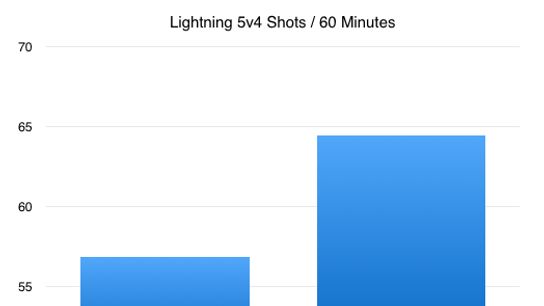
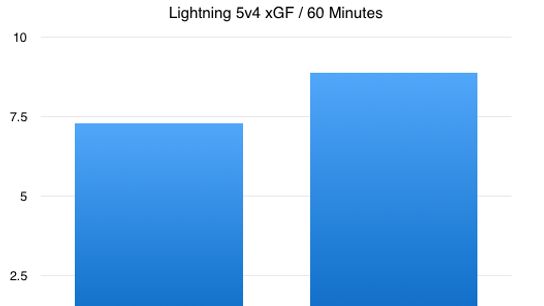
All of this is to say: You weren’t dreaming. Jon Cooper made changes to his strategy that had an impact both on the visuals and underlying numbers. The Lightning are Stanley Cup Champions because of it. I’ve dished a lot of criticism in his direction over the years for failing to do exactly this, so it’s only fair that I dedicate an entire blog post to giving him the credit he definitely deserves here.
As always, thanks for reading.