
With the start of the season upon us, I thought it would be fun to talk about how the league that we know of now came into being. Before I can talk about the NHL as it is constituted today, I have to talk about the events that led up to it and the actions of its predecessors. As with most success, much of how things are created is based on failure and rejection. Hockey is no different in this regards as many of the decisions made in the early days of professional hockey led to the product that we have today.
In 1909, P.J. Doran had acquired the Montreal Wanderers of the East Coast Hockey Association (ECHA) and intended to move the team to the Jubilee Rink in Montreal, which he owned, instead of keeping in the Montreal Arena. This annoyed the other owners of the league because the Jubilee Rink couldn’t hold as many people as the Montreal Arena, meaning the visiting teams would get less of the gate than they would be used to. Since the league had no legal way of stopping Mr. Doran from moving his team or getting rid of him, they disbanded the ECHA and then formed the Canadian Hockey Association (CHA). This league included all of teams that the ECHA had minus the Montreal Wanderers.
Coinciding with all of the politics going on with the Montreal Wanderers was another player trying to get power within the hockey circle in John Ambrose O’Brien. O’Brien, who made his fortune through silver mines, was the owner of the Renfrew Creamery Kings and was looking to gain permission from the Stanley Cup Trustees to challenge for the Stanley Cup. At the time, the Stanley Cup was still considered to be a challenge trophy, meaning in order to claim it, you had to beat the team who had possession of it. The Stanley Cup Trustees were responsible for deciding who got the right to do so. In this case, despite being the champions of a different league, the Trustees refused their application to challenge.
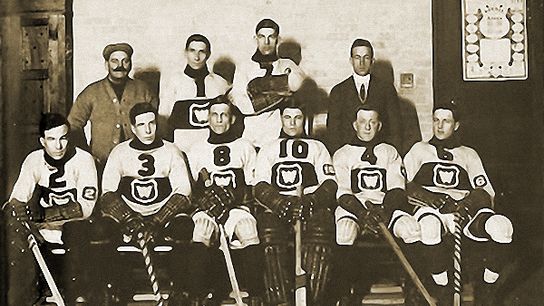
Despite this, O’Brien tried to take advantage of the Wanderers situation in the ECHA to try to gain admittance into the new CHA so they could have a shot at the Stanley Cup. The CHA denied their application which then left O’Brien and Renfrew out in the cold again. However, in the lobby of the hotel where these meetings were taking place, O’Brien ran into Jimmy Gardner, an official for the Montreal Wanderers. The Wanderers were just told that they would not be joining the new league and needless to say both teams were annoyed. Thus the two teams began talks to create a rival league to compete against the CHA.
Thus the National Hockey Association (NHA) was born. Included in this new league were the Renfrew Millionaires (formerly the Creamery Kings), Montreal Wanderers, Cobalt Silver Kings, and the Haileybury Comets. As well, O’Brien and Gardner cooked up an idea to help the Montreal Wanderers build up a good rivalry within the city of Montreal. They decided to create a new team to be predominately French speaking in which O’Brien would own. That team would be the Montreal Canadiens.
By 1910, the NHA would be tremendously successful while the CHA would founder. A large part of this has to do with the NHA going out and signing the CHA’s best players such as hall of famers Cyclone Taylor, and Frank and Lester Patrick. This forced the Stanley Cup Trustees to take the league seriously and allow their winner a chance to challenge for the Stanley Cup. The CHA however lost much of their competitiveness to the NHA and started to fail to draw crowds. This caused the CHA to try to work out a deal to merge with the NHA. Still feeling slighted by their rejection from the year before, the NHA did not allow a full merger. Instead they allowed the Ottawa Senators and Montreal Shamrocks into their league but refused everyone else. This caused the CHA to fold.

By the start of World War 1, things started to go south for the NHA. Keep in mind that during this time period, there wasn’t a single predominant professional hockey league in Canada (or the US) like there is today with the NHL. There were multiple leagues competing with each other for players. Thus, due to the combination of players being shipped off to Europe and players being poached by the Pacific Coast Hockey Association (PCHA), the NHA had a number of teams fold. So for self-preservation, the NHA and the PCHA came to an agreement that the PCHA can only “draft… certain players from a team in alternating years. For example, before the 1915-1916 season, the Quebec Bulldogs was the team that was eligible to be drafted from. In a different year it could have been the Montreal Canadiens, Ottawa Senators, etc.
This is where the city of Toronto dictated the future of the NHA. As mentioned earlier, the Quebec Bulldogs was the team eligible to be drafted from by the PCHA before the 1915-1916 season. Toronto Shamrocks owner, Eddie Livingstone, decided he would circumvent this draft by making a couple of trades with Quebec in order to hide their players on the Toronto team so they couldn’t be moved to the PCHA, after which he would trade them back to Quebec. This infuriated the PCHA and decided to disregard the agreement in place with the NHA and just sign everyone from the Shamrocks. To combat this, Livingstone bought the Toronto Blueshirts, also from the NHA, without the NHA’s permission in order to feed players for the Shamrocks. However, by the time the PCHA was done with Livingstone’s teams, the NHA had ordered Livingstone to sell the Shamrocks but couldn’t because between his two teams, he only had enough players for one of them.
This caused the Shamrocks to fold, leaving the Blueshirts as the only team left in Toronto. This aspect wreaked havoc on the NHA’s schedule as the cost of transportation to go to Toronto was high for teams in Quebec and Ottawa. They deemed making the trip only once not to be worth it for them. The NHA at first attempted to create a team made up of military hockey players waiting to go to Europe, however, once they were shipped off, they were faced with the same problem. In the end, the NHA decided to suspend the Toronto Blueshirts and finish the season with four teams (Montreal Canadiens, Montreal Wanderers, Quebec Bulldogs, Ottawa Senators).

After the season the owners of the NHA had enough of Eddie Livingstone and were looking for ways to get rid of him. However, they had no legal means of doing this in their constitution or within the legal boundaries of the country. So instead, the NHA took a page out of the old CHA’s book and they decided to fold the NHA and create the National Hockey League (NHL) in which every team minus Livingstone’s Blueshirts were granted admittance. As Wanderers’ owner Sam Lichtenhein said, “We didn't throw Livingstone out; he's still got his franchise in the old National Hockey Association. He has his team, and we wish him well. The only problem is he's playing in a one-team league.…
Despite being admitted into the new NHL, the Quebec Bulldogs deemed themselves unfit financially to continue on. Thus the NHL began with four teams, the Montreal Canadiens, Montreal Wanderers, Ottawa Senators, and a new franchise, the Toronto Arenas (now the Maple Leafs). Unfortunately, the Montreal Wanderers stint in the NHL did not last very long. Four games into the season, their home rink, the Montreal Arena, burned down. This caused them to lose players and games which in the end forced them to disband. Despite some legal battling from Livingstone, the NHL was able to continue on without him and this is just the beginning of the league that would one day be king of hockey.
You guys can contact me for any comments (or corrections if you see fit) at adam.kirshenblatt@hockeybuzz.com, or on twitter @Kirshenblatt